
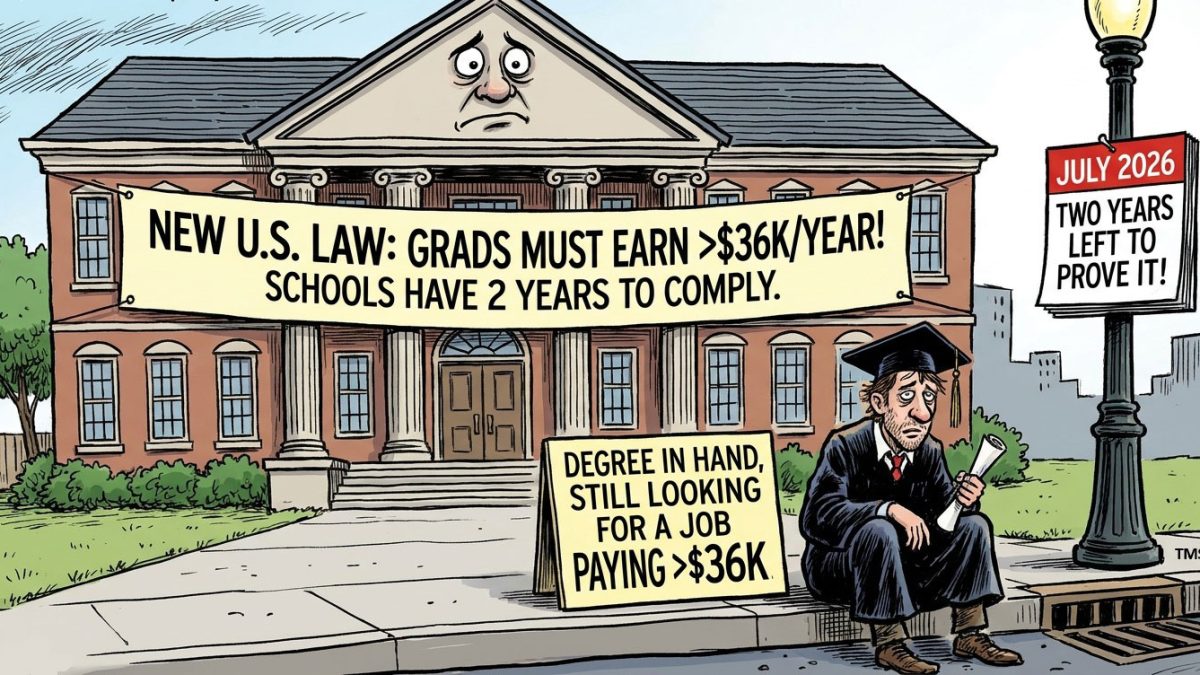
WASHINGTON, July 21 (DC Times Online) — In Washington, the Education Department has finalized a rule that ties federal student aid more closely to what college programs pay their graduates.
What changed
The new Student Tuition and Transparency System, or STATS, and Earnings Accountability rule sets a simple test: undergraduate programs must show that their graduates earn more than the typical high school diploma holder, and graduate programs must show earnings above the typical bachelor’s degree holder.
If a program fails that earnings-premium test in two of three consecutive award years, the department says it can lose access to the federal Direct Loan program. If the failures continue for three years, the department says it can move to end Title IV eligibility, including Pell Grant eligibility, for that institution’s low-earning programs.
Why the department says it did this
The department says the rule is meant to line up new and existing accountability systems. It connects the new earnings standard in the Working Families Tax Cuts Act with the department’s Financial Value Transparency and Gainful Employment rules.
According to the department, nearly all programs and sectors will fall under the same transparency and earnings-accountability framework, no matter whether they are public, private nonprofit, for-profit, or offer certificates, bachelor’s degrees or graduate degrees.
What colleges will have to report
The regulations say schools will need to report program-level and some student-level data, including tuition, fees, and financial aid such as grants and scholarships.
The department also says it will use earnings data from at least one federal agency. That data will include students who are working but not enrolled during the year being measured.
That makes the rule different from accountability systems that focus only on enrollment, completion, or test scores. Here, the main question is whether a program leaves graduates with higher earnings than workers with lower levels of education.
Who is exempt
The rule does include some exceptions.
An institution is exempt from automatic loss of Title IV eligibility if it has not participated in the Direct Loan program for the five most recently completed award years. Schools that exclusively serve people with documented disabilities are also exempt.
The department says it will also delay program-eligibility consequences for some programs that prepare students for jobs where most workers receive tipped income. The delay is meant to let the department use earnings data from tax years when the “No Tax on Tips” policy is in effect, starting with the 2026 tax year.
When it takes effect
The department said the final rule will be on public inspection in the Federal Register on June 30 and published on July 1.
NPR reported that the department said it will begin calculating the first year of graduate earnings in early 2027, and that some programs could first be labeled low-earning outcome programs in the 2028-29 financial aid award year.
Under Secretary Nicholas Kent told NPR: “If a program cannot show that it leaves its graduates financially better off than if they had never enrolled, it should not be underwritten by federal taxpayers.”
For students and families, the change could affect which programs stay eligible for federal aid. For colleges, it raises the stakes on how they track costs, report data and show that a degree or certificate leads to stronger earnings.
