BEVERLY HILLS, Calif., Aug. 16 (Our California Times) — California Pizza Kitchen has changed owners, business models and corporate identities several times since its first restaurant opened in Beverly Hills in 1985. The latest reported sale, to Consortium Brand Partners in 2025, was valued at about $300 million — less than the $470 million Golden Gate Capital paid for the chain in 2011.
That gap does not provide a full measure of the company’s performance. The transactions occurred under different financial conditions, and the available records do not show the exact terms, debt assumed or liabilities included in the 2025 deal. But the ownership changes help explain why the California-founded restaurant chain has had such a turbulent history.
From law offices to pizza kitchens
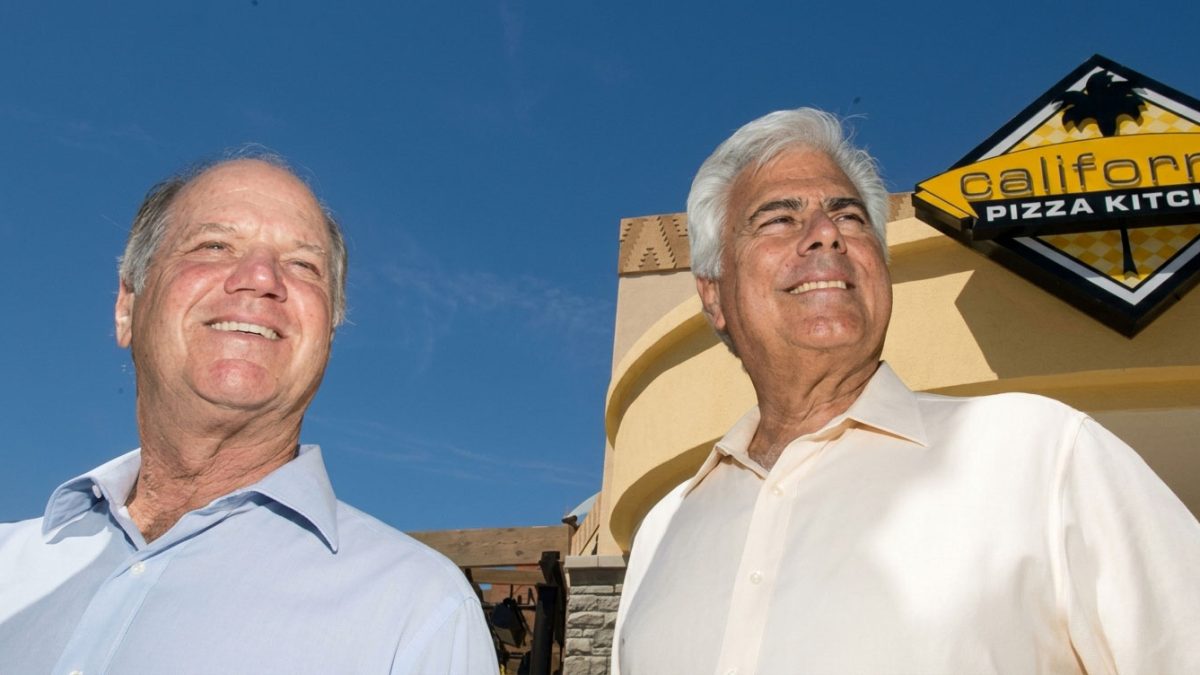
Rick Rosenfield and Larry Flax were attorneys when they opened the first California Pizza Kitchen restaurant. In interviews with Fortune and Fox Business, Rosenfield described the decision as a move from law into the restaurant business.
The founders built CPK around pizza made with ingredients and combinations that were unusual for many American restaurants at the time. Its barbecue chicken pizza became one of the chain’s best-known menu items. The company expanded to more than 200 locations worldwide before its 2011 sale, according to Rosenfield’s account reported by Fox Business.
The chain’s growth also brought outside investors. PepsiCo reportedly bought a 67% stake in 1992. In 1997, Bruckmann, Rosser, Sherrill & Co. acquired the company’s shares, while Rosenfield and Flax retained a minority stake and continued as co-chief executives and co-chairmen, Fortune reported. CPK traded on the Nasdaq National Market from 2000 until 2011, according to Business Insider.
What changed after the $470 million sale?
Golden Gate Capital, a private equity firm, acquired California Pizza Kitchen for $470 million in 2011. A private equity firm typically buys companies with the goal of improving their operations and eventually selling them, often using a mix of investor money and borrowed funds.
Rosenfield has said he believed Golden Gate changed CPK’s workplace culture and moved the company away from the founders’ management approach. “I believe that they damaged the culture from day one,” Rosenfield said in comments reported by Fox Business. He also said the new owners wanted to remake the business “in an image different than we had remade it in.”
Those statements are Rosenfield’s views. The supplied material does not include a response from Golden Gate Capital or independent records that assess whether changes in culture caused the chain’s later financial problems.
For workers and customers, a change in ownership can affect staffing, menus, prices, store investment and the pace of expansion. For investors, the central question is whether a chain can produce enough cash to support its restaurants and repay its debt. The available material does not provide a complete set of CPK’s financial statements from the period after the sale.
Why did CPK file for bankruptcy?
California Pizza Kitchen filed for Chapter 11 bankruptcy protection on July 30, 2020, during the COVID-19 pandemic. Chapter 11 allows a company to keep operating while it negotiates with creditors and reorganizes its debts or sells the business under court supervision.
The pandemic sharply disrupted restaurants by limiting indoor dining and reducing customer traffic. Fox Business reported that CPK emerged from bankruptcy in November 2020. A bankruptcy filing and restructuring can affect many groups at once: employees may face reduced hours or store closures, landlords may lose rent, suppliers may have to wait for payment, and customers may see fewer nearby restaurants.
Some published accounts said CPK had more than $400 million in debt when it filed. The supplied material does not identify the underlying bankruptcy filing or other primary financial record for that figure, so the precise debt level cannot be independently established here.
Restaurant Business reported that CPK was operated by its lenders for five years after the bankruptcy, closed nearly 50 locations and saw sales fall by more than 28%. The underlying operating records were not provided. Those figures therefore should be treated as reported claims rather than a complete financial history.
Who owns CPK now?
Consortium Brand Partners acquired California Pizza Kitchen in a transaction reported in 2025 at approximately $300 million. Fox Business described the price as just under $300 million, while other accounts rounded it to $300 million. The available material also differs on whether the transaction was announced in December 2025 or completed in November.
Eldridge Industries was identified as part of the buyer group in one summary of the transaction. The supplied information does not establish the buyer structure, exact closing date, liabilities assumed or detailed plans for the company.
The new ownership marks another attempt to rebuild a brand that began as a California experiment and became a national chain. The business challenge is not only selling pizza. It is maintaining restaurant-level sales, managing labor and food costs, funding stores and keeping the brand relevant while preserving the customer and employee experience that helped CPK grow in the first place.
Rosenfield has emphasized that employee commitment was central to the founders’ strategy. “We felt if our employees came to work and were motivated and cared, then the customer would be the beneficiary,” he told Restaurant Business.
That philosophy is now part of the chain’s history. Whether it becomes part of CPK’s next business strategy will depend on decisions by Consortium Brand Partners, the company’s lenders, employees, franchisees and customers.